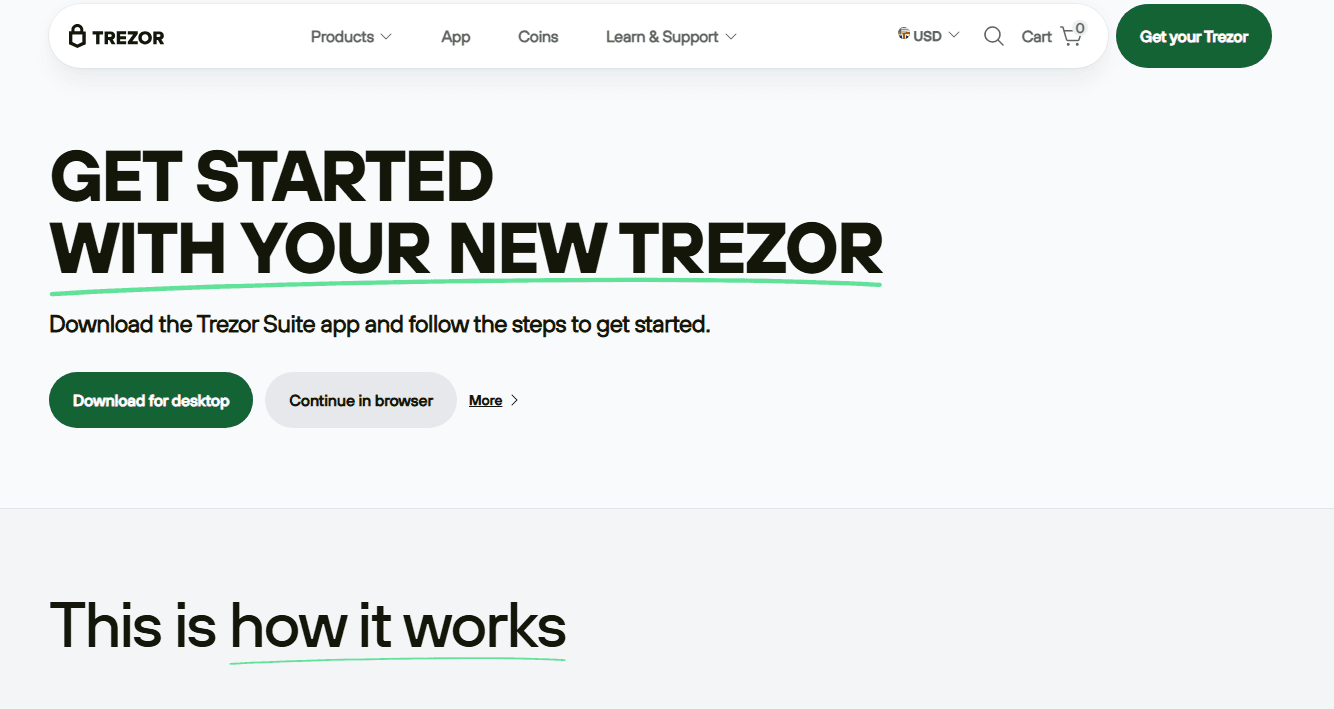
Trezor.io/Start: The Secure Beginning for Managing Your Cryptocurrency
Trezor.io/start is the official setup entry point for users who have purchased a Trezor hardware wallet and want to initialize it securely. This setup process plays a critical role in protecting digital assets by ensuring that private keys are generated safely and remain under the user’s full control. Understanding how Trezor.io/start works helps users avoid common security mistakes and provides a solid foundation for long-term cryptocurrency management.
Trezor hardware wallets are designed to protect digital assets by storing private keys offline. The guided setup process provided through Trezor.io/start ensures that the device is properly configured, verified, and secured before any cryptocurrency is stored or transferred.
What Is Trezor.io/Start?
Trezor.io/start is the official onboarding platform developed to guide users through the secure setup of a Trezor hardware wallet. It provides structured, step-by-step instructions for installing the required wallet software, connecting the device, creating a new wallet, and securing recovery information.
Using Trezor.io/start ensures that users follow verified and trusted instructions. This is especially important in the cryptocurrency space, where unofficial guides or malicious sources can put funds at risk. Starting with official instructions reduces the likelihood of setup errors and security vulnerabilities.
Why Proper Setup Is Essential
The initial setup of a hardware wallet is one of the most important stages of crypto ownership. Errors made during this phase, such as incorrectly recording the recovery seed or skipping security steps, can lead to permanent loss of funds.
Trezor.io/start exists to help users complete each step correctly and understand why each action matters. It reinforces the concept of self-custody, where users maintain full responsibility for their private keys instead of trusting centralized services.
Preparing for the Setup Process
Before beginning the setup process, users should prepare a private and secure environment. This ensures that sensitive information such as the recovery seed is not exposed to others.
Users should have the following items ready:
A new Trezor hardware wallet
A compatible computer or mobile device
A quiet and private workspace
Pen and paper for writing down the recovery seed
Taking time to prepare helps ensure a smooth and secure setup experience.
Installing the Trezor Wallet Software
One of the first steps explained at Trezor.io/start is installing the official Trezor wallet software. This software acts as the interface between the user and the hardware wallet.
The wallet software allows users to:
View cryptocurrency balances
Send and receive digital assets
Manage wallet settings
Update device firmware
Monitor transaction history
Although the software provides the interface, private keys always remain inside the Trezor device, never on the computer or mobile device.
Connecting and Initializing the Device
After installing the wallet software, users connect their Trezor hardware wallet to their device. The software then detects the wallet and guides the user through the initialization process.
New users typically choose to create a new wallet. During this process, the Trezor device generates a unique recovery seed directly on the device screen. This seed is created offline, ensuring it cannot be intercepted by malware or online threats.
Understanding the Recovery Seed
The recovery seed is the most important security element created during the setup process at Trezor.io/start. It allows users to restore access to their wallet if the device is lost, damaged, or reset.
Key guidelines for protecting the recovery seed include:
Writing it down exactly as displayed
Never storing it digitally
Never sharing it with anyone
Keeping it in a secure, offline location
Anyone with access to the recovery seed has full control over the wallet’s funds, making secure storage essential.
Verifying the Recovery Seed
To reduce the risk of errors, users are asked to verify the recovery seed during setup. This typically involves confirming selected words from the seed phrase.
This verification step ensures that the recovery seed has been recorded correctly and that the wallet can be recovered if needed in the future.
Setting Up a Secure PIN
As part of the setup process, users create a PIN code for their Trezor device. The PIN is required every time the device is connected and unlocked.
The PIN protects the device from unauthorized physical access. If incorrect PIN attempts are made repeatedly, the device enforces security delays to prevent brute-force attacks.
Choosing a strong but memorable PIN is an important aspect of device security.
Verifying Device Authenticity
Trezor.io/start includes steps to verify that the hardware wallet is genuine and has not been tampered with. This verification process ensures the device meets Trezor’s security standards.
Completing this step provides confidence that the wallet is safe to use and that private keys are being generated in a secure environment.
Adding Cryptocurrency Accounts
Once the device is fully initialized and secured, users can begin adding cryptocurrency accounts through the Trezor wallet software. Each account corresponds to a specific blockchain network.
Users can manage multiple cryptocurrencies using a single Trezor device. Adding accounts does not expose private keys and maintains full user control over funds.
Using the Wallet After Setup
After completing the setup process at Trezor.io/start, the wallet is ready for everyday use. Users connect the Trezor device whenever they want to send, receive, or manage digital assets.
All sensitive actions require confirmation directly on the hardware wallet. This physical confirmation ensures that even if the connected computer is compromised, funds cannot be moved without user approval.
Common Setup Mistakes to Avoid
Trezor.io/start helps users avoid common errors that can compromise security, including:
Skipping recovery seed backup
Taking photos of the recovery seed
Storing recovery words online
Sharing sensitive information
Rushing through setup steps
Avoiding these mistakes is critical for long-term asset protection.
Security Education Provided During Setup
A key strength of Trezor.io/start is its emphasis on security education. Users learn how hardware wallets function, why private keys must remain offline, and how self-custody protects against third-party risks.
This education empowers users to make informed decisions and adopt safe practices when managing cryptocurrency.
Long-Term Benefits of Proper Setup
Completing the setup process correctly provides lasting benefits such as:
Full ownership and control of assets
Reduced exposure to hacking and phishing
Protection from exchange failures
Improved privacy and independence
A properly configured Trezor hardware wallet can safely store digital assets for many years.
Trezor.io/Start and Self-Custody
Trezor.io/start represents the first step toward true self-custody. By completing the setup process, users take full responsibility for securing their digital assets without relying on centralized services.
This approach aligns with the core principles of blockchain technology, including decentralization, transparency, and user empowerment.
Conclusion
Trezor.io/start is the essential gateway for setting up a Trezor hardware wallet securely. It guides users through installing wallet software, initializing the device, generating and verifying the recovery seed, securing the device with a PIN, and preparing the wallet for everyday use.
By following the setup instructions carefully and understanding the importance of each step, users can establish a strong security foundation. Starting correctly ensures that cryptocurrency remains safe, private, and fully under the user’s control.